Best Musical Keyboards for Beginners in India 2026
Top 5 61-Key Electronic Keyboards for Learning Piano & Playing Music
Yamaha • Casio • Touch Response • Indian Sounds • Practice Modes
Learning to play a musical keyboard can be an enjoyable hobby for children and adults. Whether you want to learn Bollywood songs, play piano melodies, practise music at home or explore Indian musical instruments, choosing the right beginner keyboard is an important first step.
Many beginner keyboards come with 61 keys, built-in speakers, instrument sounds, rhythms and practice functions. Some models also offer touch-sensitive keys, which respond to how softly or strongly you press them.
In this guide, we compare five popular beginner-friendly keyboards from Yamaha and Casio, including options for basic learning and Indian music.
Top 5 Musical Keyboards – Quick Comparison
| Keyboard Model | Keys | Sounds | Special Feature | Best For |
|---|---|---|---|---|
| Yamaha PSR-E283 | 61 | 410 voices | Lesson and quiz modes | First-time learners |
| Yamaha PSR-E383 | 61 | 650 voices | Touch-sensitive keys | Serious beginners |
| Casio CT-X870IN | 61 | 600 tones | Indian sounds and rhythms | Indian music |
| Casio CT-S300 | 61 | 400 tones | Portable design | Home practice |
| Yamaha PSR-F52 | 61 | 136 voices | Simple controls | Basic learning |
1. Yamaha PSR-E283 – Beginner Portable Keyboard
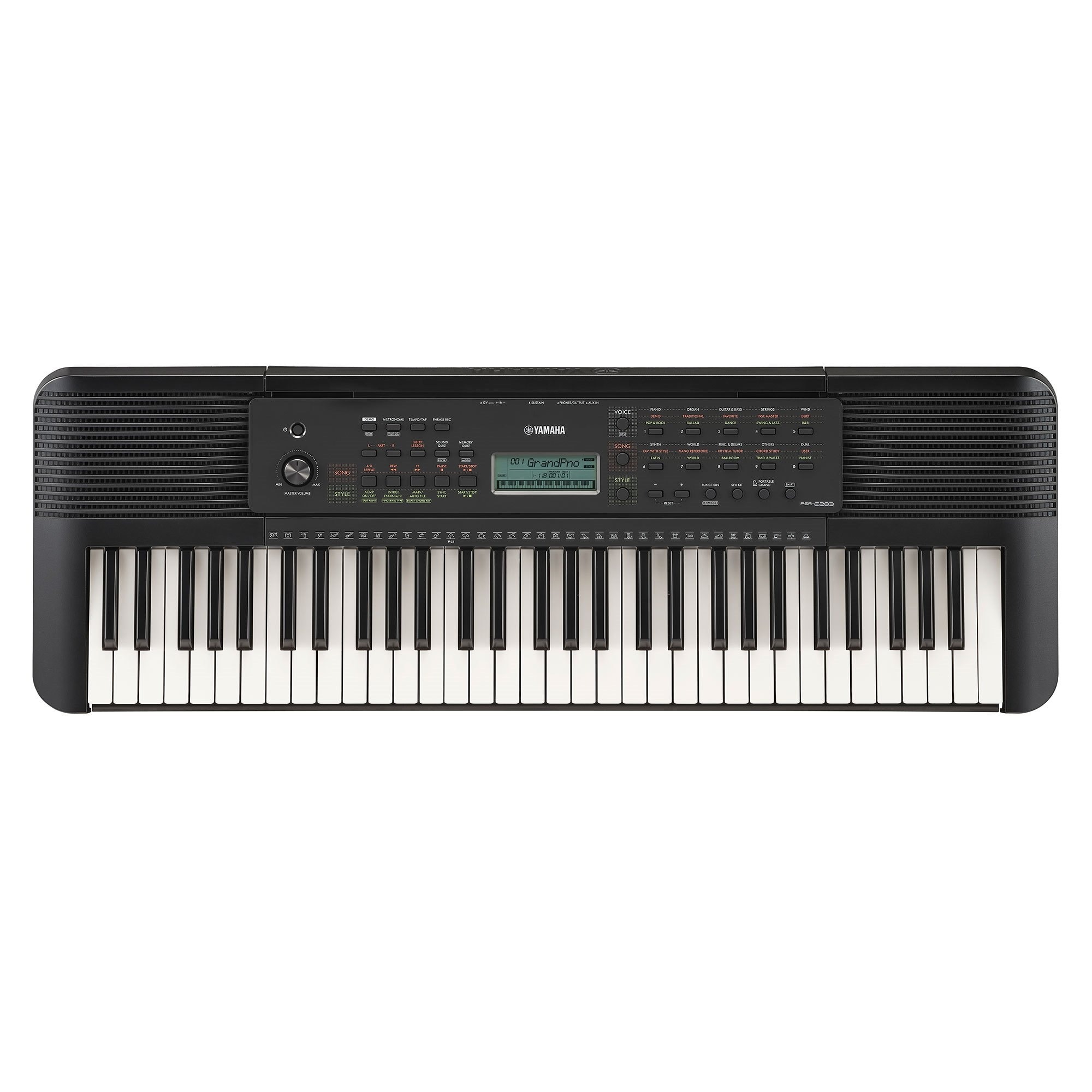
The Yamaha PSR-E283 is an entry-level portable keyboard designed for people who are starting their musical journey. It includes built-in learning functions, different instrument voices and automatic accompaniment styles. Its simple controls make it a practical option for children and adults learning basic melodies and chords.
| Number of Keys | 61 |
| Instrument Voices | 410 |
| Accompaniment Styles | 150 |
| Built-in Songs | 122 |
| Polyphony | 32 notes |
| Learning Features | Lesson mode, Quiz mode, Smart Chord, Duo mode |
| Connectivity | Headphone/output, AUX IN |
Why Consider It?
- Beginner-friendly learning functions.
- 410 instrument voices to explore.
- Built-in songs and accompaniment rhythms.
- Headphone connection for quiet practice.
- Battery operation for portable use.
Keep in mind: The PSR-E283 does not have touch-sensitive keys. If you want the volume of each note to respond to your finger pressure, consider the PSR-E383 instead.
2. Yamaha PSR-E383 – Touch-Sensitive Keyboard
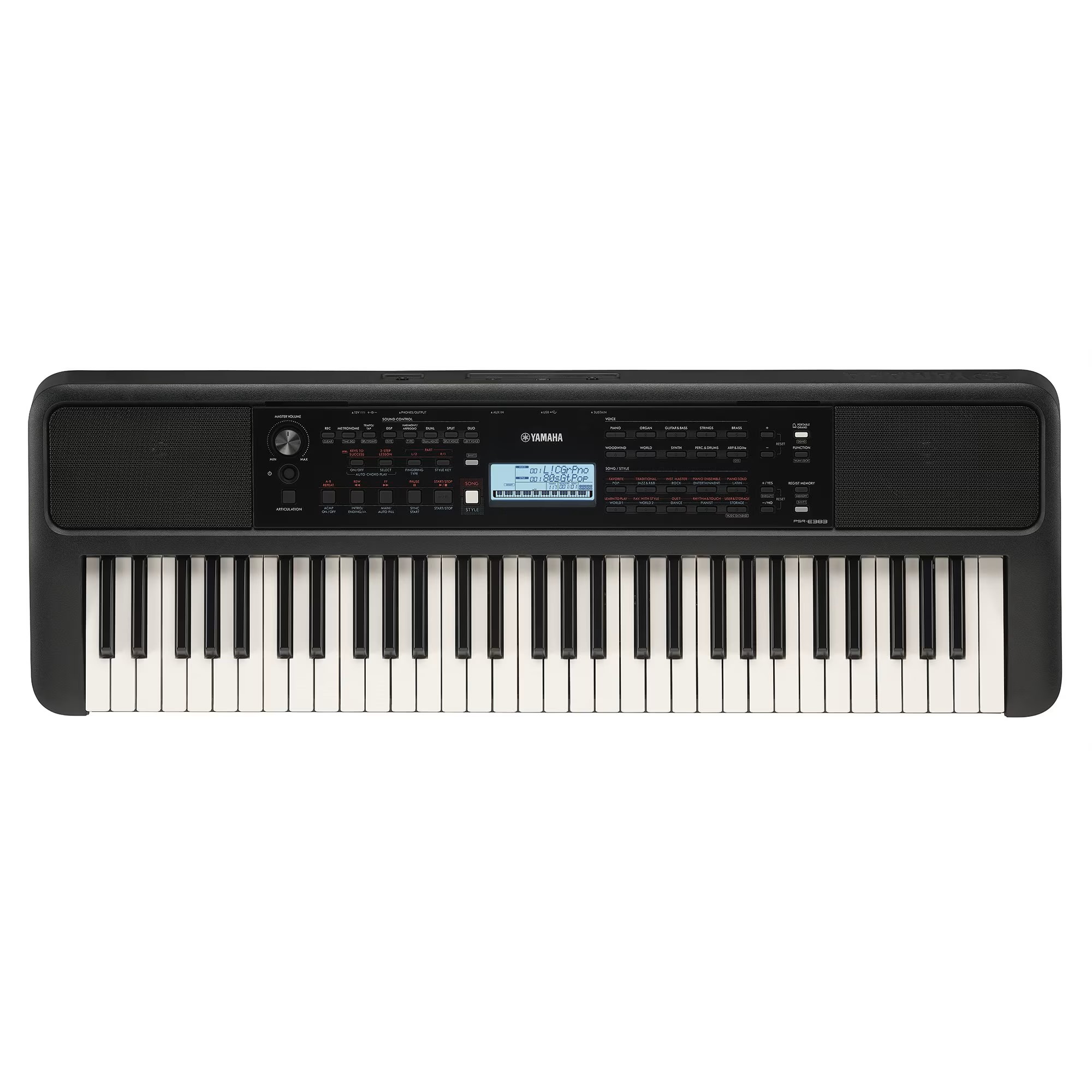
The Yamaha PSR-E383 is a more feature-rich option for beginners who want to develop their playing skills. Its touch-sensitive keys respond to the force of your playing, helping you practise expressive melodies and piano techniques. It also includes a wide selection of voices and accompaniment styles.
| Number of Keys | 61 |
| Instrument Voices | 650 |
| Accompaniment Styles | 260 |
| Keyboard Response | Touch-sensitive |
| Polyphony | 48 notes |
| Learning Features | Lesson functions, Duo mode, recording |
| Connectivity | USB audio/MIDI and AUX IN |
Why Consider It?
- Touch-sensitive keys for expressive playing.
- Large collection of instrument voices.
- 260 accompaniment styles for playing along with music.
- USB audio/MIDI connectivity.
- Useful lesson and recording functions.
Keep in mind: This is a 61-key portable arranger keyboard, not an 88-key weighted digital piano. Check whether the power adapter and stand are included in the seller's package.
3. Casio CT-X870IN – Indian Musical Keyboard

The Casio CT-X870IN is an interesting option for people who enjoy Indian music. It includes Indian instrument tones and regional rhythms, allowing learners to explore sounds associated with Indian musical styles. It also offers touch response, recording and performance features.
| Number of Keys | 61 |
| Instrument Tones | 600, including 21 Indian tones |
| Rhythms | 195, including 26 Indian rhythms |
| Touch Response | 3 sensitivity types, plus off |
| Polyphony | 48 notes |
| Recording | Multi-track recording functions |
| Speaker Output | 2.5W + 2.5W |
Why Consider It?
- Indian instrument sounds such as sitar, tabla and harmonium.
- Indian rhythms for regional music styles.
- Touch-sensitive keys.
- Layer, split and pitch-bend functions.
- Recording and USB-MIDI connectivity.
Keep in mind: It has more performance features than a basic beginner keyboard. Learn the basic notes and chords first, then explore its additional functions.
4. Casio CT-S300 – Portable 61-Key Keyboard
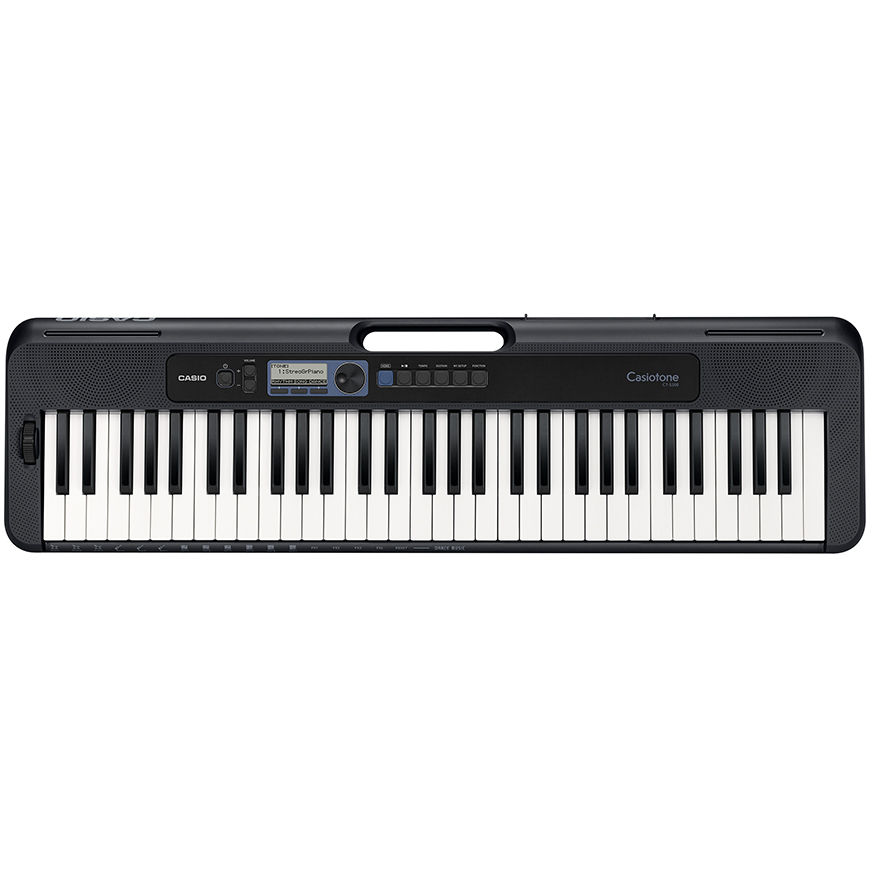
The Casio CT-S300 is a compact Casiotone keyboard for learners who want a portable instrument for everyday practice. Its 61 keys, touch response and built-in sounds make it useful for learning melodies, chords and basic keyboard techniques.
| Number of Keys | 61 |
| Instrument Tones | 400 |
| Rhythms | 77 |
| Polyphony | 48 notes |
| Keyboard Response | Touch response |
| Extra Features | Pitch bend wheel, LCD display, app connectivity |
| Portability | Compact body and battery operation |
Why Consider It?
- Compact and portable design.
- Touch response for expressive playing.
- 400 tones and 77 rhythms.
- Pitch bend wheel for additional sound effects.
- Useful for home practice and casual music learning.
Keep in mind: Check the exact package for the power adapter and accessories. App connectivity and compatible features may depend on the device and connection method.
5. Yamaha PSR-F52 – Basic Beginner Keyboard

The Yamaha PSR-F52 is a straightforward entry-level keyboard for people who want to start learning basic notes, melodies and rhythms. Its simple control layout makes it easy to explore different sounds without getting overwhelmed by too many advanced settings.
| Number of Keys | 61 |
| Instrument Voices | 136 |
| Accompaniment Styles | 158 |
| Keyboard Response | Standard non-touch-sensitive keys |
| Learning Features | Lesson functions, Smart Chord, metronome |
| Power | AC adapter or six AA batteries |
Why Consider It?
- Simple controls for first-time learners.
- 61 keys for basic melodies and chords.
- Built-in sounds and accompaniment styles.
- Lesson and metronome functions.
- Portable design for home practice.
Keep in mind: The PSR-F52 does not have touch-sensitive keys. It is best suited to basic learning rather than expressive piano practice.
Which Musical Keyboard Should You Buy?
| Your Requirement | Model to Compare | Reason |
|---|---|---|
| First keyboard for a beginner | Yamaha PSR-E283 | Lesson and quiz functions |
| Touch-sensitive keys | Yamaha PSR-E383 | Expressive playing and learning |
| Indian musical sounds | Casio CT-X870IN | Indian tones and rhythms |
| Portable everyday practice | Casio CT-S300 | Compact design and touch response |
| Basic keyboard learning | Yamaha PSR-F52 | Simple operation |
What to Check Before Buying a Musical Keyboard
| Feature | Buying Advice |
|---|---|
| Number of Keys | 61 keys are a practical starting point for general keyboard learning. |
| Touch Response | Choose touch-sensitive keys if you want notes to respond to playing strength. |
| Polyphony | Higher polyphony can help when playing layered sounds and sustained notes. |
| Learning Functions | Lesson modes, metronome and built-in songs can support daily practice. |
| Indian Sounds | Check for sitar, tabla, harmonium and regional rhythms if you enjoy Indian music. |
| Headphone Output | Useful for practising without disturbing family members. |
| Accessories | Check the adapter, music stand, keyboard stand, sustain pedal and carrying case. |
Frequently Asked Questions
1. Is a 61-key keyboard good for beginners?
Yes. A 61-key keyboard is suitable for learning basic notes, scales, chords and many popular songs. It is also easier to carry than a full-size 88-key digital piano.
2. What is a touch-sensitive keyboard?
A touch-sensitive keyboard responds to how strongly you press a key. Pressing softly produces a softer note, while pressing harder produces a louder note. This helps develop expressive playing.
3. Which is better for beginners, Yamaha or Casio?
Both brands offer beginner-friendly keyboards. Compare the specific models, touch response, learning features, sound library and price rather than choosing only by brand.
4. Can I learn Bollywood songs on a 61-key keyboard?
Yes. Many Bollywood melodies and popular songs can be practised on a 61-key keyboard. You can also use accompaniment rhythms and instrument sounds to experiment with arrangements.
5. Do I need a keyboard stand?
A stable stand is useful for comfortable playing. It helps maintain a suitable playing height and makes regular practice easier.
6. Is a musical keyboard the same as a digital piano?
No. Portable arranger keyboards generally offer multiple instrument sounds and rhythms. Digital pianos are designed mainly for piano playing and often include 88 weighted or hammer-action keys.
Final Verdict
For a first-time learner, the Yamaha PSR-E283 is worth considering because of its built-in lessons and beginner-friendly features. If touch-sensitive keys are important, compare the Yamaha PSR-E383 and Casio CT-S300. For people interested in Indian music, the Casio CT-X870IN offers Indian instrument tones and rhythms. The Yamaha PSR-F52 is a simpler option for learning basic notes and melodies.
Before purchasing, compare the current Amazon price, exact model number, warranty and included accessories. Choose a keyboard that matches your learning goals so you can practise comfortably and consistently.
Image note: Product-specific image URLs are included for all five keyboards. Their hotlink compatibility and rendering on Blogger have not been independently tested. Product specifications can vary by region or package; check the exact model and included accessories before buying.